
Choosing the right foundation is the most important step in any makeup routine. A perfectly matched foundation can make your skin look smooth, healthy, and natural, while the wrong shade or undertone can instantly make makeup look heavy, gray, orange, or artificial—even if the product itself is high quality.
Many people struggle with foundation because they focus only on whether a shade is light or dark. In reality, a flawless base depends on understanding three key factors: skin tone, undertone, and foundation formula. When these elements work together, foundation blends seamlessly into the skin and enhances your natural beauty.
Understanding Skin Tone vs Undertone
Table of Contents
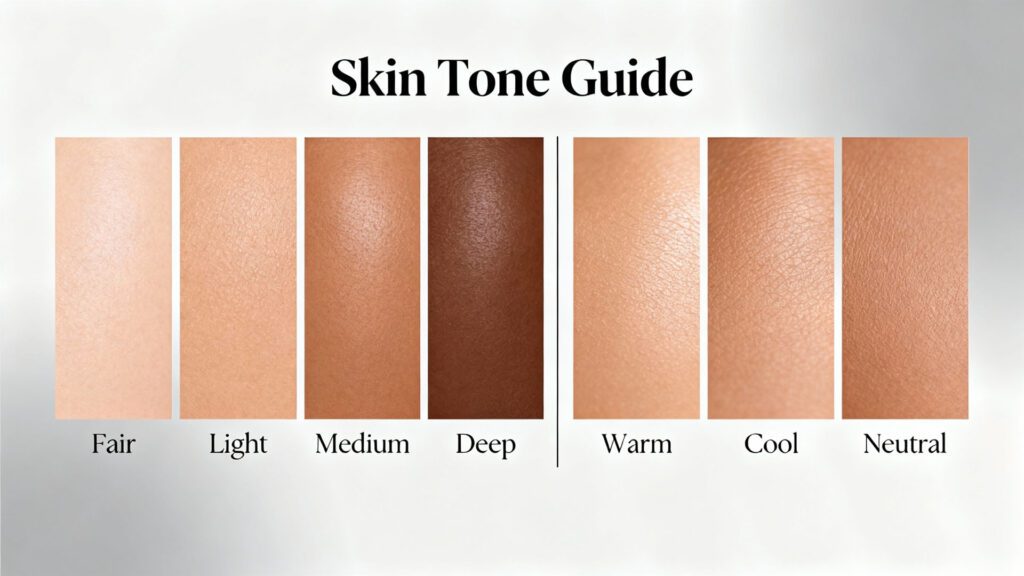
Skin tone and undertone work together to determine how foundation appears on the skin.
Skin tone refers to the visible color of your skin. It is usually described as fair, light, medium, tan, or deep. Skin tone can change slightly with sun exposure, tanning, or seasonal changes.
Undertone is the subtle hue beneath your skin’s surface. Unlike skin tone, undertone never changes. This hidden color is the main reason a foundation can look “off” even when the shade depth seems correct.
- Warm undertone: yellow, golden, or peach hues
- Cool undertone: pink, red, or bluish hues
- Neutral undertone: a balanced mix of warm and cool tones
Why Undertone Matters More Than Shade Depth
A foundation that matches your skin tone but not your undertone can make your complexion look dull, ashy, or orange. For example, a warm-toned foundation on cool skin may turn peachy, while a cool-toned foundation on warm skin can appear gray.
Choosing the correct undertone ensures that foundation melts into the skin and looks natural in both indoor lighting and daylight.
How to Identify Your Undertone Correctly
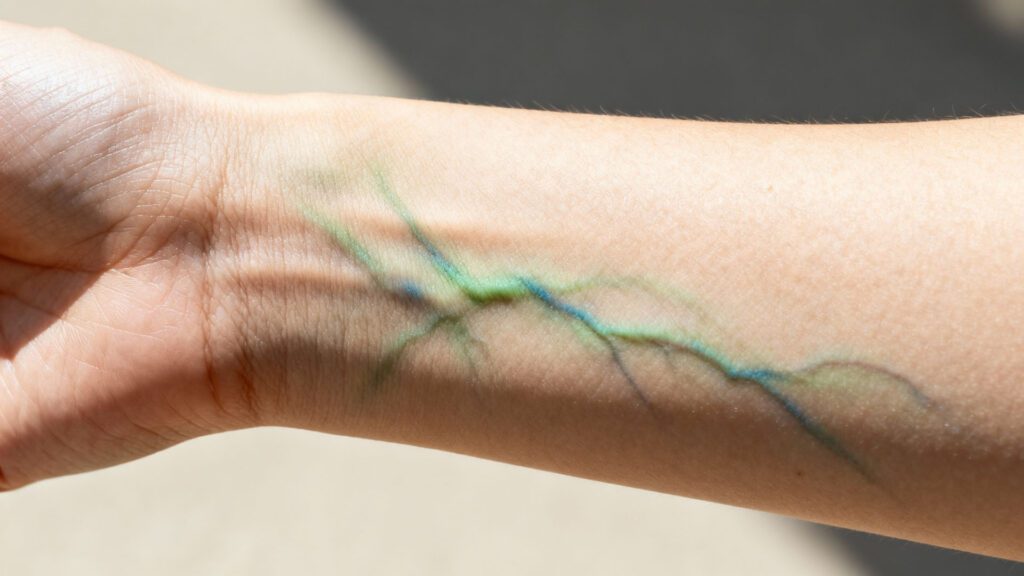
The vein test is one of the easiest ways to identify your undertone.
Look at the veins on your wrist under natural light:
- Green-looking veins usually indicate a warm undertone
- Blue or purple veins suggest a cool undertone
- A mix of both often means a neutral undertone

Gold and silver jewelry can help reveal whether your undertone is warm or cool.
If gold jewelry enhances your skin, you likely have a warm undertone. If silver looks better, your undertone is probably cool. If both flatter you, you may have a neutral undertone.
How to Match Foundation to Your Skin Tone
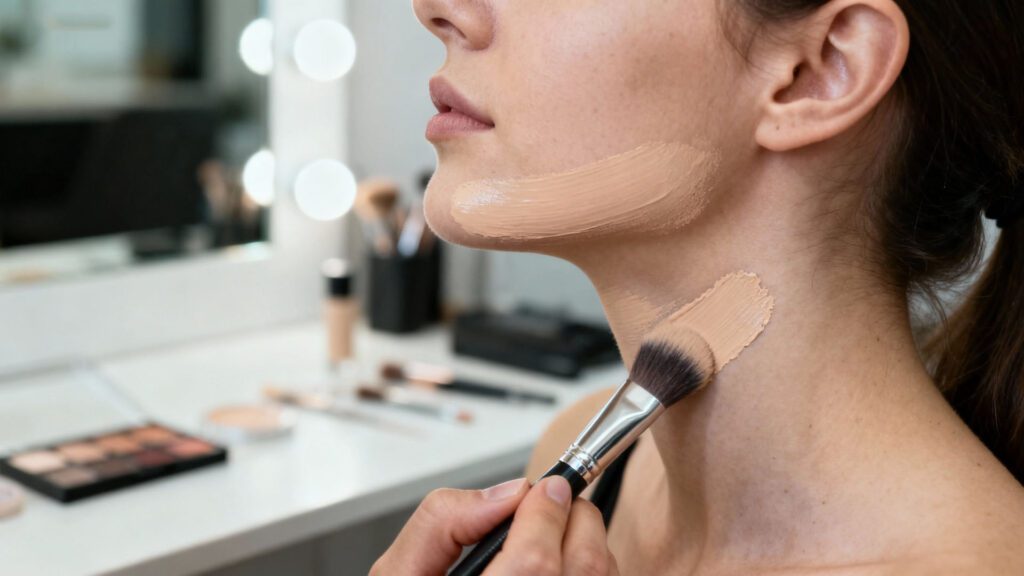
Foundation should always be tested along the jawline and neck.
Once you know your undertone, choosing the correct shade depth becomes much easier. Always test foundation along your jawline and slightly down the neck. The right shade should blend seamlessly between your face and neck without creating a visible line.
- Testing foundation on the hand instead of the face
- Choosing a lighter shade to brighten the complexion
- Relying only on store lighting
- Ignoring the neck when matching foundation
Choosing the Right Foundation Formula for Your Skin Type
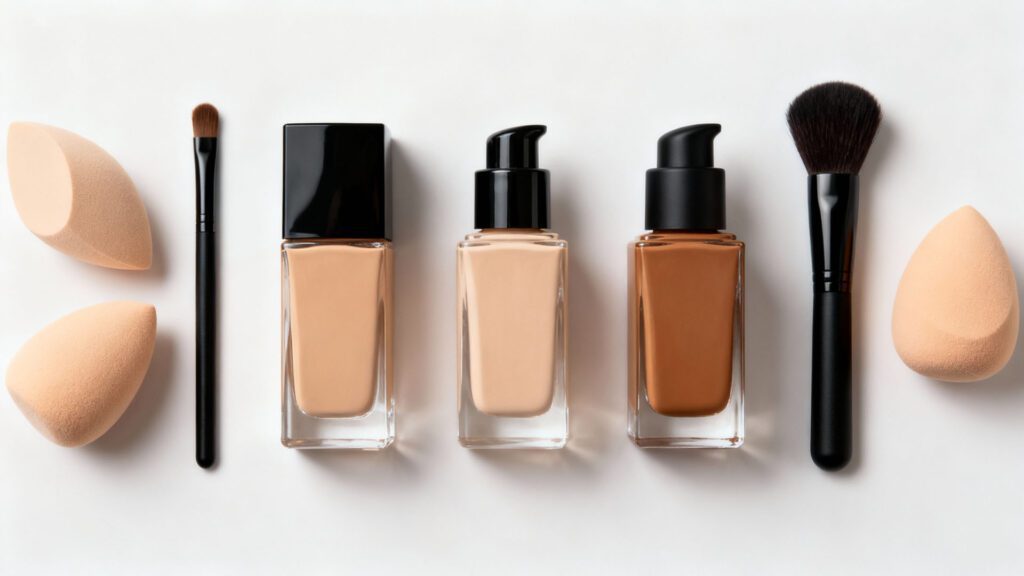
The right foundation finish depends on your skin type, not just preference.
- Oily skin: Matte or oil-free foundations help control shine.
- Dry skin: Liquid or cream foundations with hydrating ingredients prevent flaking.
- Combination skin: Satin or natural finishes balance dry and oily areas.
- Sensitive or acne-prone skin: Fragrance-free, non-comedogenic formulas reduce irritation.
Foundation Oxidation and Lighting Effects
Some foundations darken after application due to oxidation. Always wait 10–15 minutes before deciding if a shade is correct, and check it in natural daylight whenever possible.
Adjusting Foundation for Seasonal Skin Changes
Your skin tone may deepen in summer and lighten in winter. Many makeup artists recommend keeping two foundation shades and mixing them as needed instead of constantly switching products.
Signs You’ve Found the Perfect Foundation
- Your foundation blends seamlessly into your neck
- Your skin looks even but still natural
- No gray, orange, or pink cast appears
- Your makeup lasts well throughout the day
Conclusion
Choosing the right foundation is not about trends or expensive brands. It is about understanding your skin tone, undertone, and skin type. Once you master these fundamentals, your foundation will enhance your skin instead of masking it.