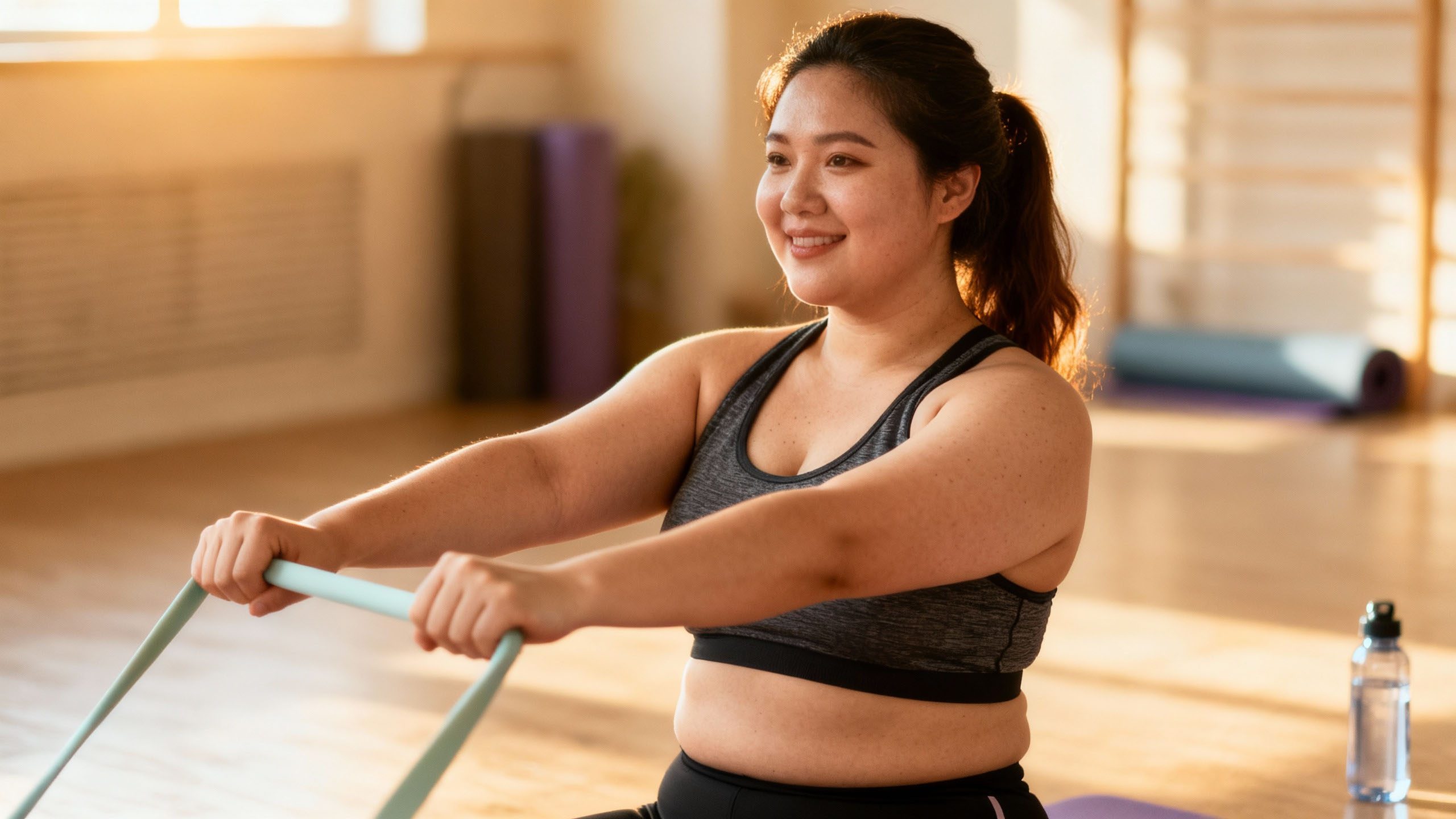
Starting fitness as an absolute beginner can feel overwhelming and unclear. This guide focuses on simple, realistic steps that help you begin safely and confidently.
What Fitness Really Means for Beginners
Table of Contents
Fitness is not about intense workouts or perfect routines at the start. It means moving your body regularly in ways that support health and daily energy.
Forget Advanced Programs and Complex Plans
Many beginners quit because they start with programs meant for experienced people. Simple movement builds a foundation that prepares the body for more later.
Understand Your Starting Point Honestly
Everyone begins fitness at a different level. Accepting where you are helps you progress without frustration or injury.
Start With Low-Impact Movements
Low-impact exercises reduce stress on joints and muscles. Walking, gentle stretching, and basic mobility movements are ideal for beginners.
How Often Beginners Should Move
Daily movement does not mean daily workouts. Even light activity several times per week builds consistency and confidence.
Why Short Sessions Work Better
Short workouts are easier to commit to mentally and physically. They help create a habit without overwhelming your schedule.
Focus on Form and Awareness
Learning correct movement patterns is more important than speed or intensity. Good form protects the body and improves long-term progress.
Rest Is Part of Fitness
Beginners often underestimate the importance of rest. Recovery allows the body to adapt and prevents early burnout.
Nutrition Does Not Need to Be Complicated
You do not need a strict diet to start fitness. Simple balanced meals and enough water support beginner activity levels.
Build Confidence Through Small Wins
Every completed session builds confidence. Small wins create momentum and make fitness feel achievable.
Conclusion
A beginner-friendly fitness approach focuses on simplicity and consistency. When you start slow and stay patient, fitness becomes a sustainable part of life.