A simple skin type test you can do at home helps you understand your skin’s natural behavior without tools or professional analysis. Knowing your skin type makes it easier to choose the right products and avoid routines that cause irritation or imbalance. This test focuses on how your skin reacts on its own, without interference from skincare products.
Start by washing your face with a gentle cleanser and patting it dry. Do not apply any skincare products afterward. Leave your skin bare for about 30 to 60 minutes. During this time, avoid touching your face so you can observe its natural state accurately.
After waiting, pay attention to how your skin feels and looks. If your skin feels tight, rough, or flaky, it likely leans toward dry. If your face looks shiny, especially across most areas, your skin is likely oily. If you notice oiliness mainly in the forehead, nose, and chin while other areas feel normal or dry, you probably have combination skin. If your skin feels comfortable, balanced, and not noticeably oily or dry, it is likely normal.
This at-home test provides a clear starting point rather than a permanent label. Skin can change due to weather, stress, hormones, or routine changes. Repeating this simple test occasionally helps you stay aligned with your skin’s current needs and build a skincare routine that actually works for you.
Why At-Home Skin Tests Work
Table of Contents
At-home skin tests work because they focus on observing your skin in its most natural state. By removing products, makeup, and treatments from the equation, you allow your skin to show its true behavior. This makes it easier to identify patterns such as oil production, dryness, or sensitivity without outside influence.
These tests are effective because they rely on simple, direct feedback from your skin. Sensations like tightness, shine, or comfort are clear indicators of how your skin functions day to day. Unlike complex tools or professional devices, at-home tests highlight how your skin actually feels in real-life conditions.
At-home skin tests also encourage consistency and awareness. Repeating the test over time helps you notice changes caused by seasons, lifestyle, or skincare adjustments. This ongoing observation is often more useful than a single professional assessment, especially for everyday routine decisions.
Most importantly, at-home tests are practical and accessible. They empower you to understand your skin without cost or pressure, making skincare more intuitive. When you recognize your skin’s signals, choosing the right products and routines becomes simpler and more effective.
What You Need for the Test
This test requires minimal preparation.
- A gentle facial cleanser
- A clean towel
- One hour of waiting time
What you need for the test is simple and easily available, which is why this method works well at home. No special tools or devices are required, and the focus stays on observing your skin naturally rather than measuring it with equipment.
You will need a gentle facial cleanser that does not leave heavy residue or cause irritation. This helps remove dirt, oil, and skincare products without disrupting your skin’s natural balance. Clean skin ensures more accurate results.
A clean towel is also important for gently patting your face dry after cleansing. Avoid rubbing, as friction can temporarily irritate the skin and affect how it feels during the test period.
Finally, you need time and patience. Allowing your skin to sit product-free for 30 to 60 minutes gives it the space to reveal its natural tendencies. With just these simple items and a calm observation period, you can gain clear insight into your skin type.
Step 1: Cleanse Your Face
Begin by cleansing your face with a gentle, non-stripping cleanser. This step removes makeup, sunscreen, oil, and impurities that can interfere with accurately reading your skin’s natural behavior. Using a mild cleanser ensures your skin is clean without being overly dried or irritated.
Wash your face with lukewarm water and massage the cleanser lightly using your fingertips. Avoid harsh scrubbing, brushes, or exfoliating products, as these can temporarily alter how your skin feels and lead to misleading results. The goal is to reset your skin, not stress it.
After cleansing, gently pat your face dry with a clean towel. Do not rub, and do not apply any skincare products afterward. Starting with clean, bare skin creates the most reliable foundation for the rest of the test.
Step 2: Wait and Observe
After cleansing, allow your skin to rest without applying any products. This waiting period is essential because it gives your skin time to return to its natural state. During this time, your skin will begin to show how it behaves on its own, free from external influence.
Wait for about 30 to 60 minutes and avoid touching your face. Touching or pressing the skin can transfer oil or cause irritation, which may affect what you observe. Try to stay in a comfortable indoor environment without extreme heat or humidity.
As you wait, pay attention to sensations and appearance. Notice whether your skin feels tight, comfortable, oily, or uneven in different areas. These natural responses provide the clearest clues about your skin type and prepare you for the next step of identifying what your skin truly needs.
Step 3: Check Your Skin
After one hour, examine how your skin looks and feels.
- Oily Skin: Shine appears on most areas of the face.
- Dry Skin: Skin feels tight, rough, or flaky.
- Combination Skin: Oily T-zone with normal or dry cheeks.
- Normal Skin: Balanced feel with minimal shine or dryness.
After the waiting period, take a close look at your skin and notice how it feels. This is the moment when your skin’s natural behavior becomes clear. Focus on both appearance and sensation rather than looking for perfection or flaws.
Check for shine across your face, especially on the forehead, nose, and chin. Notice if your skin feels tight, rough, or flaky, or if it feels comfortable and balanced. Pay attention to differences between areas, as this can indicate combination skin.
This step is about observation, not judgment. Your skin may show more than one trait, and that is completely normal. Understanding these patterns helps you choose products and routines that support your skin instead of working against it.
Optional Blotting Paper Test
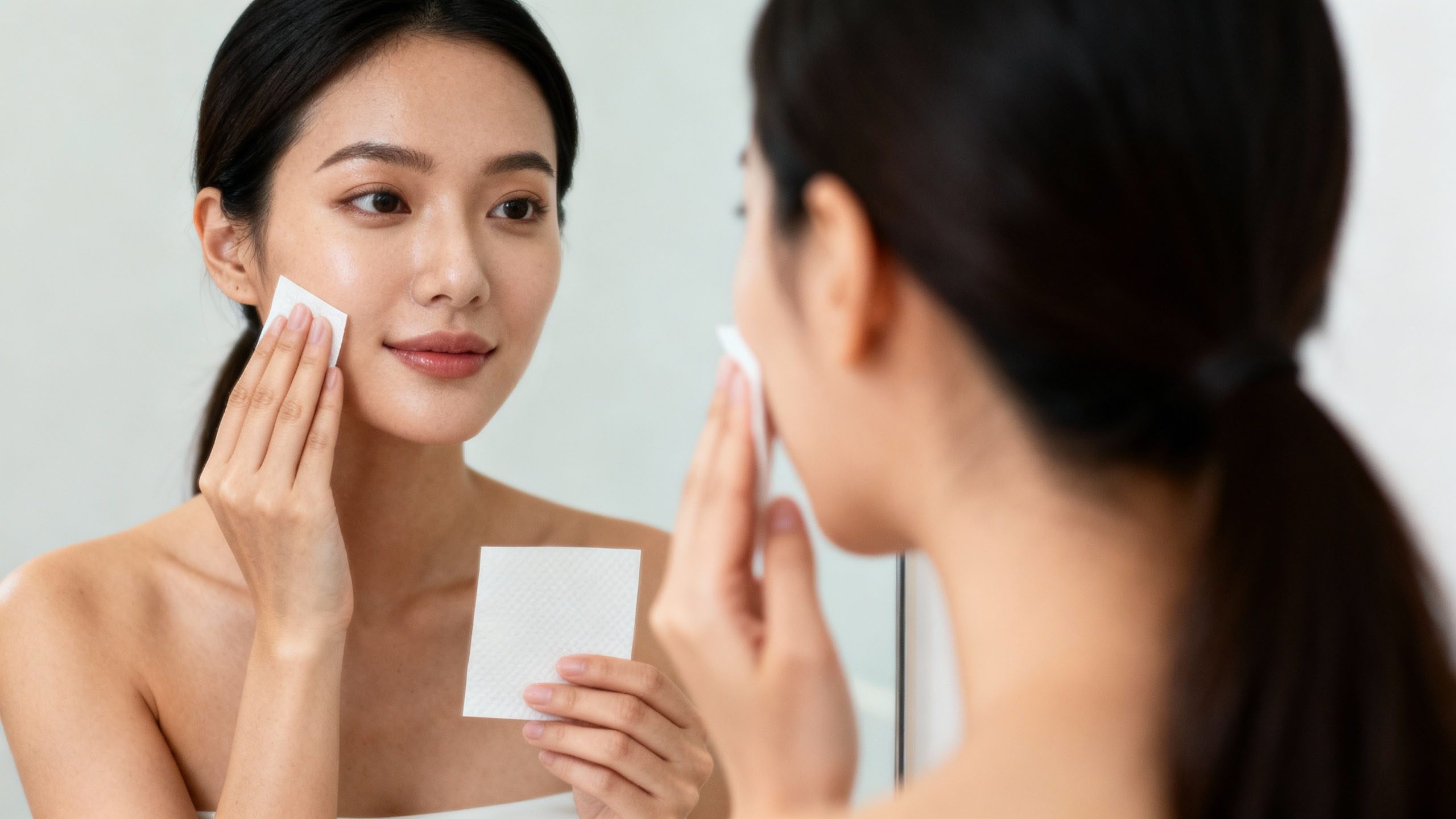
If you have blotting paper or a tissue, gently press it on different areas of your face.
- Heavy oil marks indicate oily skin
- Oil only in the T-zone suggests combination skin
- Little to no oil indicates dry or normal skin
The optional blotting paper test can provide extra clarity if you want more confirmation of your skin type. This step is especially helpful for identifying oil distribution across different areas of the face. While not required, it can support what you observed during the waiting period.
Gently press a clean blotting paper or tissue onto different areas of your face, such as the forehead, nose, cheeks, and chin. Do not rub or drag the paper, as this can stimulate oil production. Simply press and lift to see how much oil transfers onto the paper.
If the paper absorbs oil from most areas, your skin is likely oily. If oil appears mainly in the T-zone while other areas remain dry or clean, combination skin is likely. Little to no oil usually indicates dry or normal skin. This test works best as a supporting tool, helping you feel more confident about your final assessment.
Common Mistakes to Avoid
Incorrect testing can lead to wrong conclusions.
- Testing immediately after cleansing
- Testing while using active skincare products
- Testing during extreme weather conditions
One common mistake to avoid is applying skincare products too soon after cleansing. Moisturizers, toners, or serums can mask your skin’s natural behavior and lead to inaccurate results. For this test to work properly, your skin must remain completely product-free during the observation period.
Another mistake is using harsh or foaming cleansers before the test. Strong cleansers can strip the skin and cause temporary tightness or dryness, making it difficult to identify your true skin type. Always choose a gentle cleanser that cleans without disrupting your skin’s natural balance.
Touching your face frequently during the waiting time is also a common error. Hands can transfer oil and bacteria, altering how your skin feels and looks. Additionally, performing the test in extreme heat, humidity, or cold can affect oil production and hydration levels.
Lastly, assuming your skin type is fixed is a mistake. Skin can change with seasons, lifestyle, stress, and age. Avoid treating this test as a permanent label and instead use it as a helpful guide that can be repeated whenever your skin’s needs change.
How Often Should You Repeat the Test?
You should repeat the at-home skin type test whenever you notice changes in how your skin behaves. Skin is not static, and factors such as weather, lifestyle, stress, hormones, and skincare routines can all influence oil production and hydration levels over time. Repeating the test helps you stay aligned with your skin’s current needs.
For most people, testing every few months is enough, especially during seasonal changes. Skin often becomes drier in colder months and oilier in warmer weather, so reassessing helps you adjust products accordingly and avoid unnecessary irritation.
It’s also a good idea to repeat the test after making major changes to your skincare routine. Introducing new products, active ingredients, or treatments can shift how your skin responds. Checking again ensures your routine still supports your skin rather than working against it.
Ultimately, repeating the test is about awareness, not overanalysis. Listening to your skin and reassessing when something feels off allows you to care for it in a more responsive and effective way.
Conclusion
At-home skin type tests offer a simple and reliable way to understand your skin without complexity or cost. By observing how your skin behaves naturally, you gain practical insight that helps guide better skincare choices and avoid unnecessary trial and error.
Repeating the test when changes occur keeps your routine aligned with your skin’s real needs. Rather than relying on fixed labels, this approach encourages awareness and flexibility. When you understand your skin as it is now, building and maintaining an effective skincare routine becomes easier, more comfortable, and more successful over time.