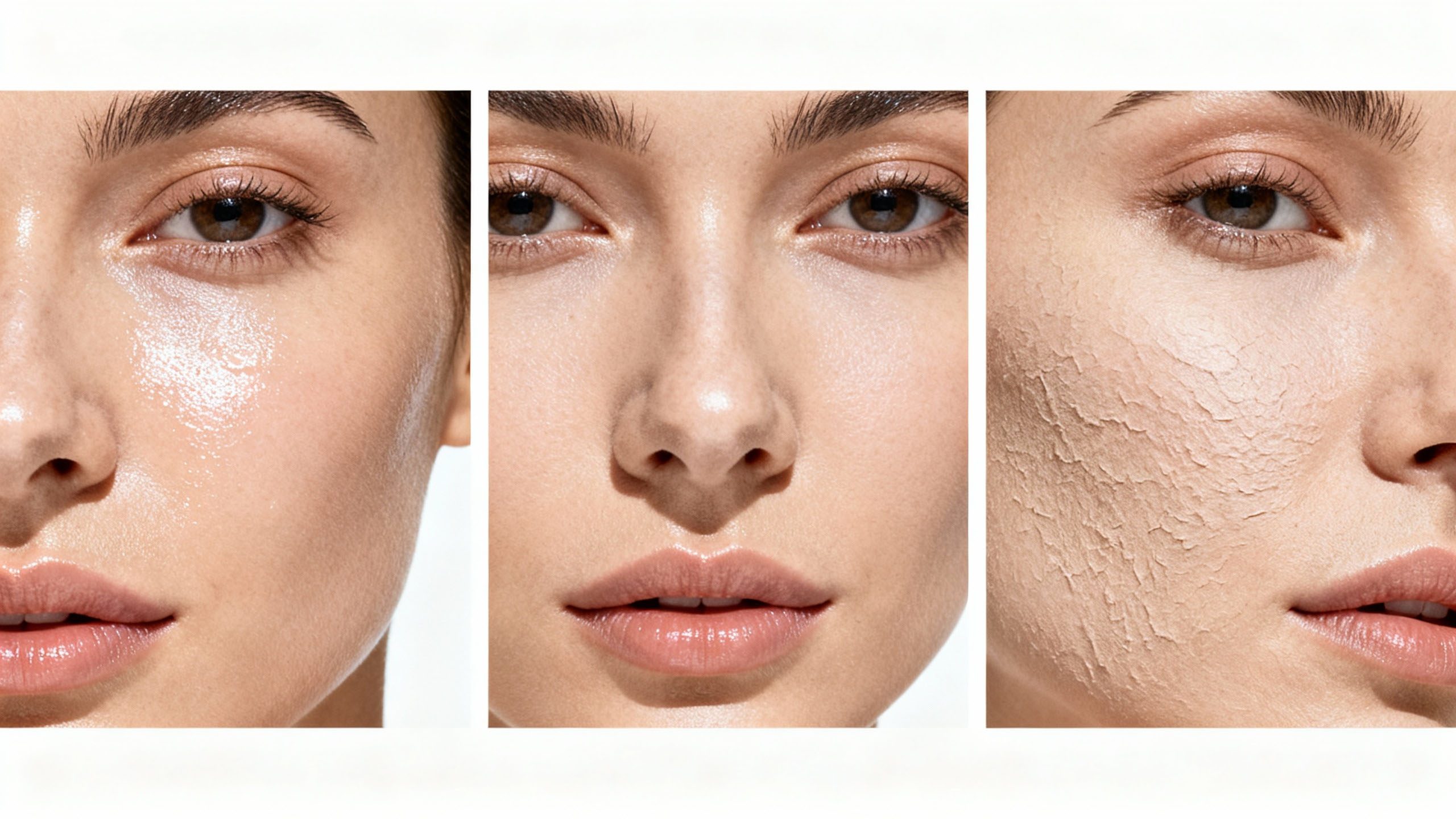
Many people struggle to identify their skin type correctly because skin can behave differently throughout the day. Shine, tightness, or uneven texture can be confusing, especially when skincare products are involved.
Learning how to tell whether your skin is oily, dry, or combination helps you choose products that work with your skin instead of against it.
Why Skin Type Is Often Misidentified
Table of Contents
Skin is influenced by climate, skincare habits, and daily activities. Using the wrong cleanser or over-washing can temporarily change how your skin feels.
This is why identifying your skin type should always be done on clean, product-free skin.
The Bare Skin Observation Method
This method reveals how your skin behaves naturally.
Wash your face with a gentle cleanser and do not apply any skincare products. Wait for 60 minutes in a normal indoor environment.
Signs of Oily Skin
Oily skin produces excess sebum, leading to visible shine.
- Noticeable shine across the forehead, nose, and chin
- Enlarged or visible pores
- Skin feels slick or greasy to the touch
- Makeup breaks down quickly
Signs of Dry Skin
Dry skin lacks sufficient moisture and natural oils.
- Tight or uncomfortable feeling after cleansing
- Flaky or rough patches
- Dull appearance
- Fine lines appear more noticeable
Signs of Combination Skin
Combination skin shows characteristics of both oily and dry skin.
- Oily T-zone (forehead, nose, and chin)
- Normal or dry cheeks
- Shine appears only in certain areas
- Different areas need different products
How Time of Day Affects Skin Behavior
Skin may appear balanced in the morning but become oily later in the day.
Pay attention to how your skin feels throughout the day rather than judging it immediately after cleansing.
Common Confusions Between Skin Types
Some people confuse dehydrated skin with dry skin.
- Dehydrated skin lacks water, not oil
- Oily skin can still be dehydrated
- Dry skin rarely looks shiny
Understanding this difference prevents misclassification.
Can Skin Type Change?
Your skin type is mostly genetic, but hormonal changes, weather, and lifestyle can influence oil production.
It is normal for skin to shift slightly over time, especially with age.
Conclusion
Knowing whether your skin is oily, dry, or combination allows you to tailor your skincare routine correctly.
Once you understand your skin’s natural behavior, choosing the right products becomes much easier and more effective.