One of the biggest reasons people struggle with dry hair is lack of structure. Doing the right things at the wrong time can still lead to dryness. This weekly schedule keeps moisture balanced without overdoing it.
Wash Day (2–3 Times Per Week)
Table of Contents
1. Pre-Wash (Optional but Powerful)
Apply a light oil or conditioner to dry hair 30 minutes before washing.
This reduces moisture loss during shampooing.
2. Gentle Shampoo
- Focus on the scalp, not the ends
- Massage gently—no scratching
- Let the shampoo rinse through the lengths naturally
3. Conditioner (Non-Negotiable)
- Apply generously from mid-lengths to ends
- Detangle gently with fingers or a wide-tooth comb
- Leave on for 2–5 minutes
4. Leave-In on Damp Hair
Apply leave-in conditioner while hair is still damp.
This locks in water—the main source of hydration.
5. Seal with Oil or Cream
Use a small amount to seal moisture, especially on the ends.
Non-Wash Days (Moisture Maintenance)
Dry hair doesn’t mean you need to rewash it.
- Refresh hair with water or a water-based spray
- Apply a small amount of leave-in if needed
- Seal lightly with oil on dry ends only
- Avoid excessive styling or touching
Weekly Deep Moisture Treatment (Once Per Week)
This step is where real transformation happens.
How to Deep Condition Properly
- Start on clean, damp hair
- Apply mask generously, section by section
- Cover with a shower cap
- Leave on for 20–30 minutes
Extra boost:
Add gentle heat (warm towel or steam) to help ingredients penetrate.
Protective Styling: Help Your Hair Hold Moisture
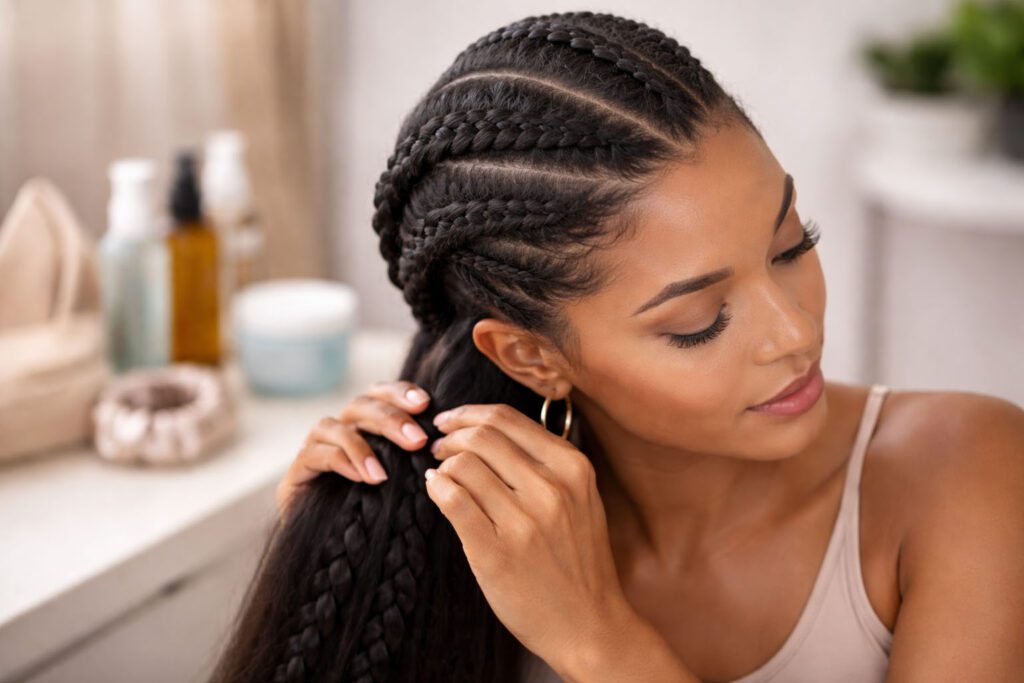
Protective styles reduce manipulation and prevent moisture loss.
Good Options for Dry Hair
- Loose braids or twists
- Low buns or ponytails
- Claw-clip styles
- Scarves or wraps
Avoid:
- Tight styles
- Constant pulling
- Styles that expose ends too much
Adjusting Dry Hair Care by Season

Dry hair reacts strongly to weather changes.
In Winter
- Increase conditioning
- Reduce washing frequency
- Protect hair from cold air and scarves
In Summer
- Protect from sun and chlorine
- Rinse hair after swimming
- Use UV-protective leave-ins
Signs Your Dry Hair Care Routine Is Working
You’re on the right track if you notice:
- Hair feels soft without product buildup
- Ends look smoother and healthier
- Less breakage during detangling
- Hair holds styles better
If hair feels greasy but still dry, it’s a sign of poor moisture balance, not lack of products.
Final Reminder: Dry Hair Is a Long-Term Relationship
There’s no “one miracle product” for dry hair. Healthy, hydrated hair comes from:
- Gentle habits
- Moisture-focused routines
- Patience and consistency
When you respect your hair’s need for hydration and protection, it will respond—slowly, but beautifully.