
Choosing the right makeup foundation isn’t just about picking “light,” “medium,” or “dark.” The perfect foundation should blend seamlessly, match your skin tone and undertone, and enhance your natural beauty without looking cakey or gray. This guide will walk you step by step—no guessing, no makeup counter confusion.
1. Understand Your Skin Tone vs. Undertone
Table of Contents
Many people mix these up, but they’re very different.
Skin Tone (Surface Color)
This is the visible color of your skin and usually falls into:
- Fair
- Light
- Medium
- Tan
- Deep
Your skin tone can change slightly with sun exposure, seasons, or tanning.
Undertone (Hidden Hue)
Your undertone never changes. It affects how foundation looks once applied.
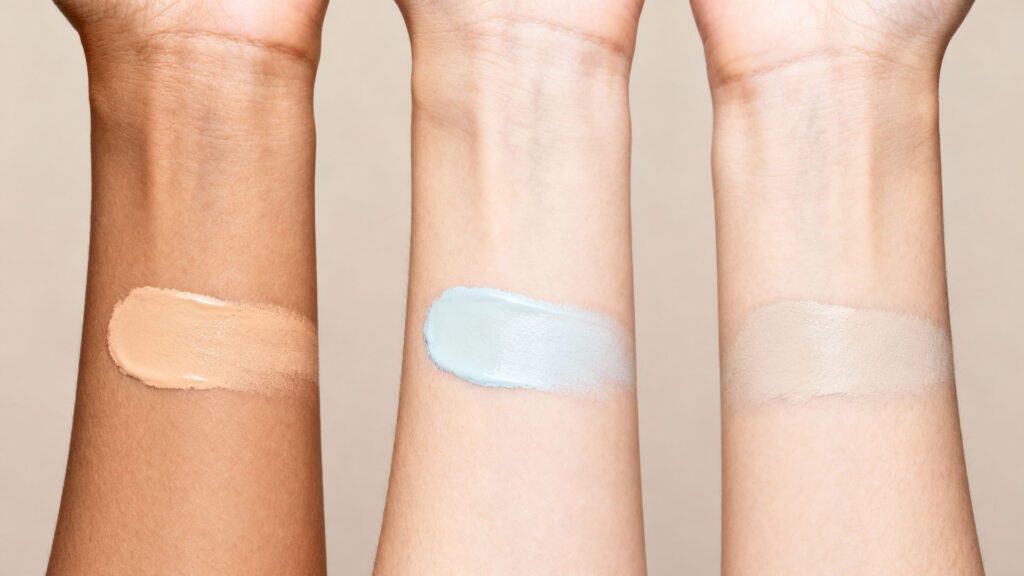
Main undertone types:
- Cool: Pink, red, or bluish hints
- Warm: Yellow, golden, or peach hints
- Neutral: A balanced mix of warm and cool
Quick tests:
- Vein test:
- Blue/purple veins → Cool
- Green veins → Warm
- Both → Neutral
- Jewelry test:
- Silver looks best → Cool
- Gold looks best → Warm
- Both look good → Neutral
2. Match Foundation to Your Undertone (Not Just Shade)
This is where most mistakes happen.
- Cool undertone: Look for foundations labeled cool, rosy, pink, or C
- Warm undertone: Choose warm, golden, yellow, or W
- Neutral undertone: Go for neutral, beige, or N
💡 Pro tip: If your foundation turns orange or gray after a few hours, the undertone is wrong—not the shade.
3. Test Foundation the Right Way
Forget testing on your hand—it rarely matches your face.
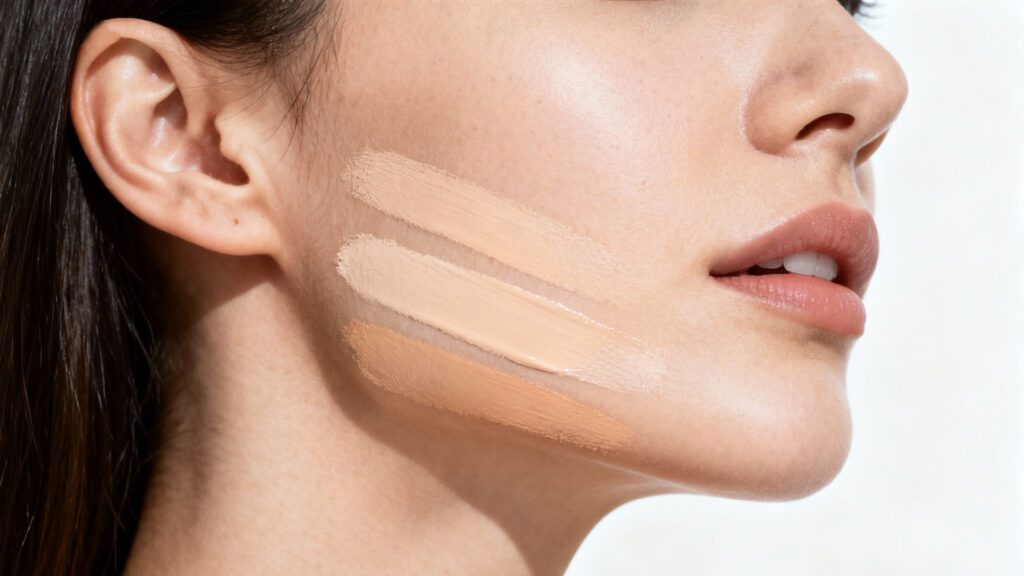
Correct method:
- Apply 2–3 shades along your jawline
- Blend slightly downward toward the neck
- Wait 10–15 minutes to check oxidation
- The best shade is the one that disappears
4. Consider Your Skin Type Before Buying
Even the perfect color can look bad if the formula is wrong.
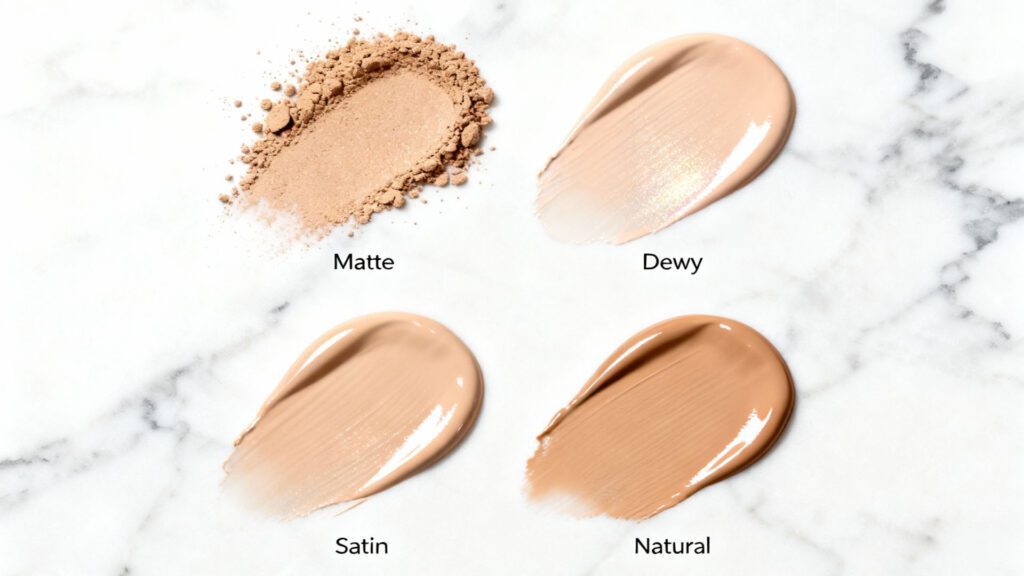
- Oily skin: Matte or oil-free foundations
- Dry skin: Hydrating, dewy, or serum foundations
- Combination skin: Natural or satin finish
- Sensitive skin: Fragrance-free, minimal ingredients
5. Seasonal Changes Matter
Your foundation shade may need adjusting during the year.

- Summer: Slightly deeper or warmer shade
- Winter: Lighter or more neutral shade
💡 Many makeup artists keep two foundation shades and mix them as needed.
6. Common Foundation Matching Mistakes
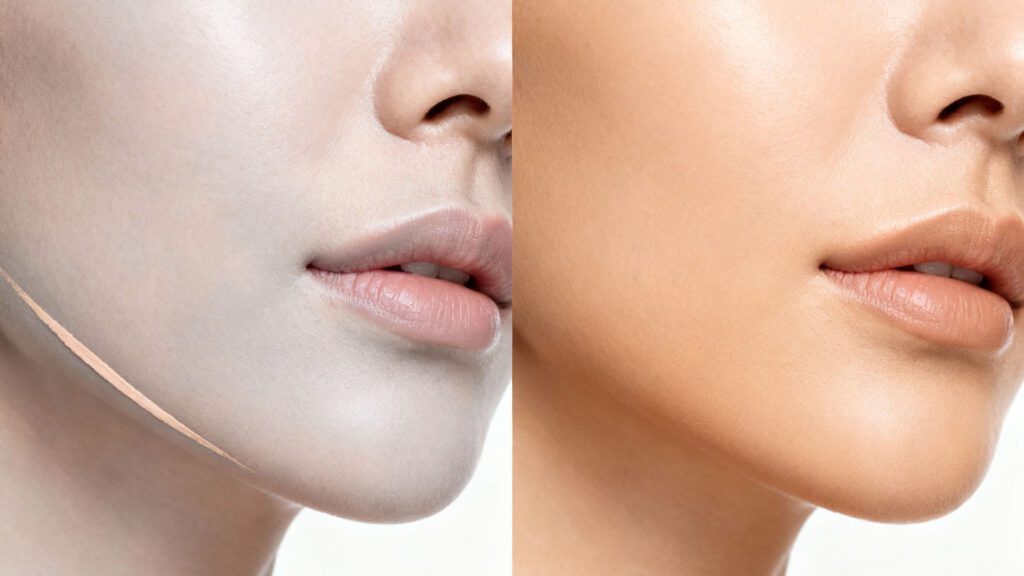
🚫 Choosing a shade too light
🚫 Ignoring undertone
🚫 Testing under harsh store lighting only
🚫 Not letting foundation oxidize
🚫 Matching to the face but not the neck
7. Final Tips for a Natural Finish
- Always apply foundation on well-prepped skin
- Use natural daylight for final checks
- Blend into the neck and hairline
- When in doubt, go slightly neutral
Conclusion
Matching foundation to your skin color is a skill—but once you understand undertones, testing techniques, and formula choices, it becomes easy. The right foundation should look like your skin, only better.