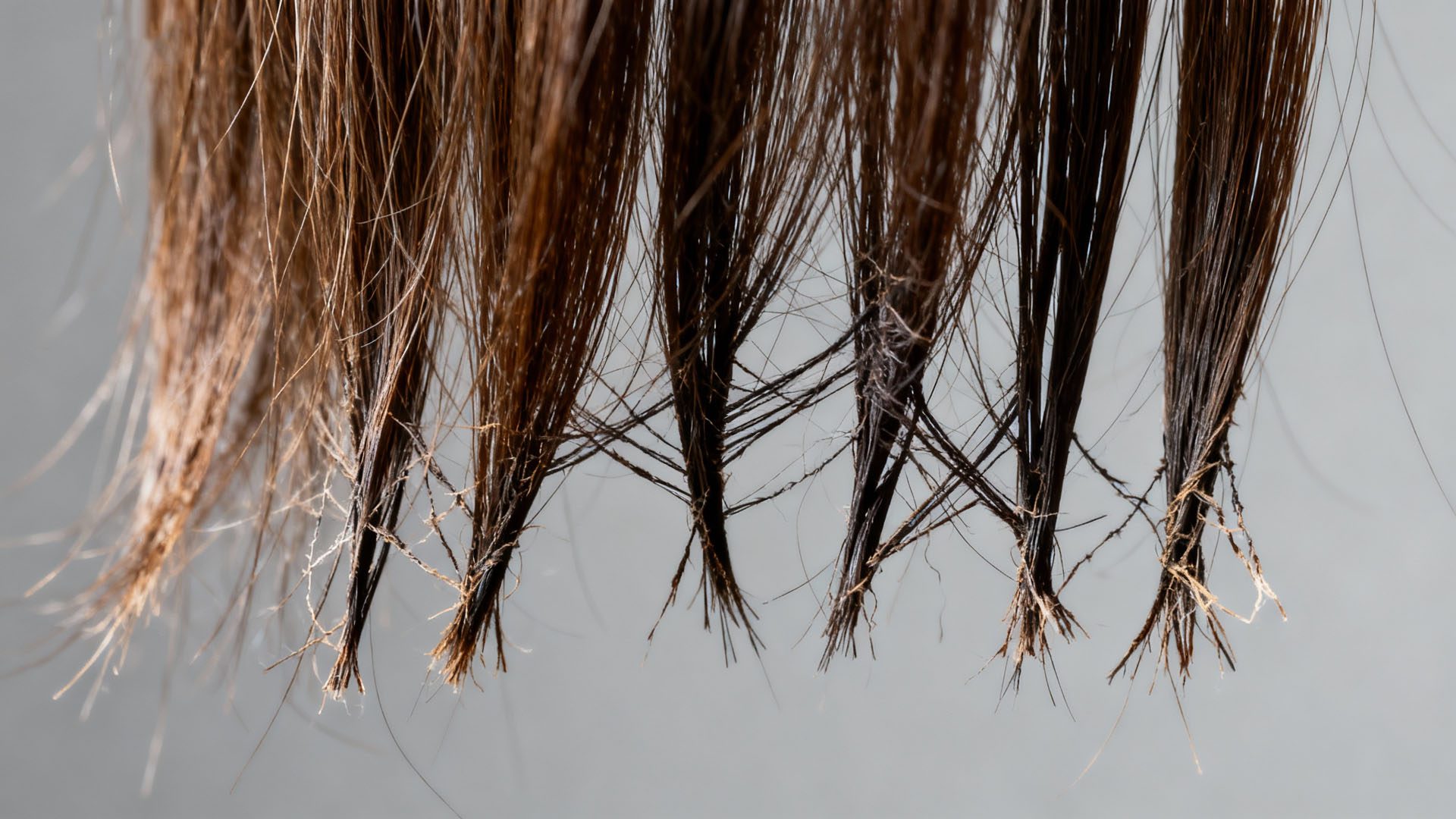
Even with good products, a few everyday mistakes can silently undo all your efforts. If your hair still feels dry no matter what you use, one (or more) of these habits may be the reason.
1. Brushing Hair When It’s Dry and Fragile
Table of Contents
Dry hair is more prone to breakage. Brushing aggressively—especially with the wrong brush—can cause split ends and hair loss.
What to do instead:
- Detangle gently, starting from the ends and moving upward
- Use a wide-tooth comb
- Detangle slightly damp hair with a leave-in conditioner
2. Using Hot Water
Hot water opens the hair cuticle too much, allowing moisture to escape. Over time, this leads to dull, brittle hair.
Better option:
Wash with lukewarm water and finish with a cool rinse to help seal moisture.
3. Skipping Trims
Dry ends don’t repair themselves. Avoiding trims allows split ends to travel up the hair shaft, making hair look thinner and drier.
Ideal schedule:
Trim every 8–12 weeks.
4. Applying Products Incorrectly
Many people apply oils on completely dry hair, which only adds shine—not moisture.
Correct method:
Moisturize first (with water or leave-in), then seal with oil.
5. Overloading Hair with Protein
Protein is important, but too much can make hair stiff and dry.
Balance is key:
If your hair feels hard or straw-like, reduce protein treatments and focus on moisture.
Natural Remedies That Help Dry Hair
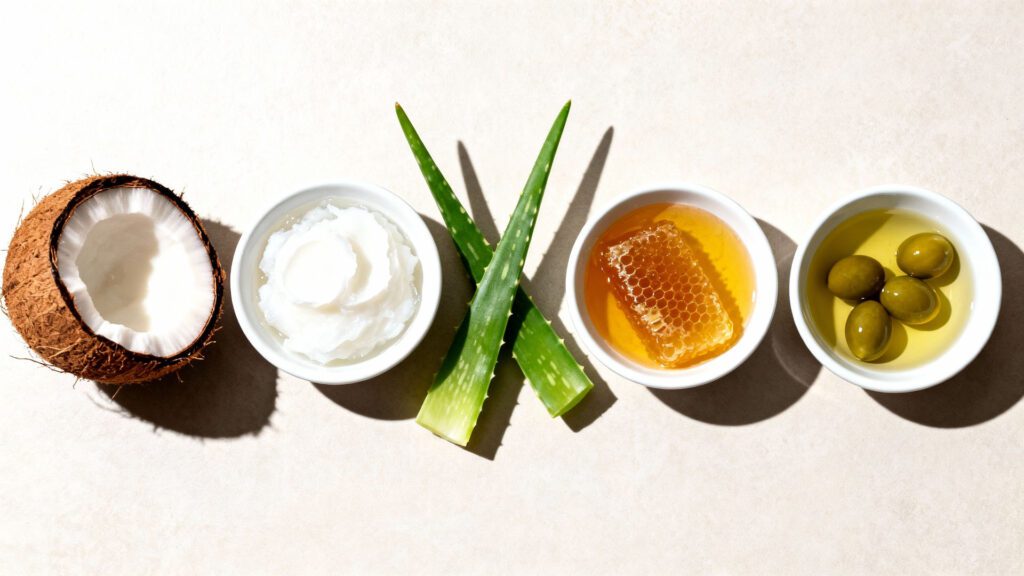
If you prefer natural or DIY care, these ingredients can support moisture when used correctly.
Coconut Oil (Pre-Wash Treatment)
Penetrates the hair shaft and reduces moisture loss.
How to use:
Apply to dry hair 30–60 minutes before washing.
Aloe Vera
Hydrates, soothes the scalp, and improves hair softness.
Use as:
- Leave-in mixed with water
- Added to hair masks
Honey
A natural humectant that attracts moisture to the hair.
Tip:
Mix honey with conditioner or yogurt for a weekly mask.
Olive or Argan Oil
Great for sealing moisture and adding softness.
Dry Hair Care Starts from the Inside
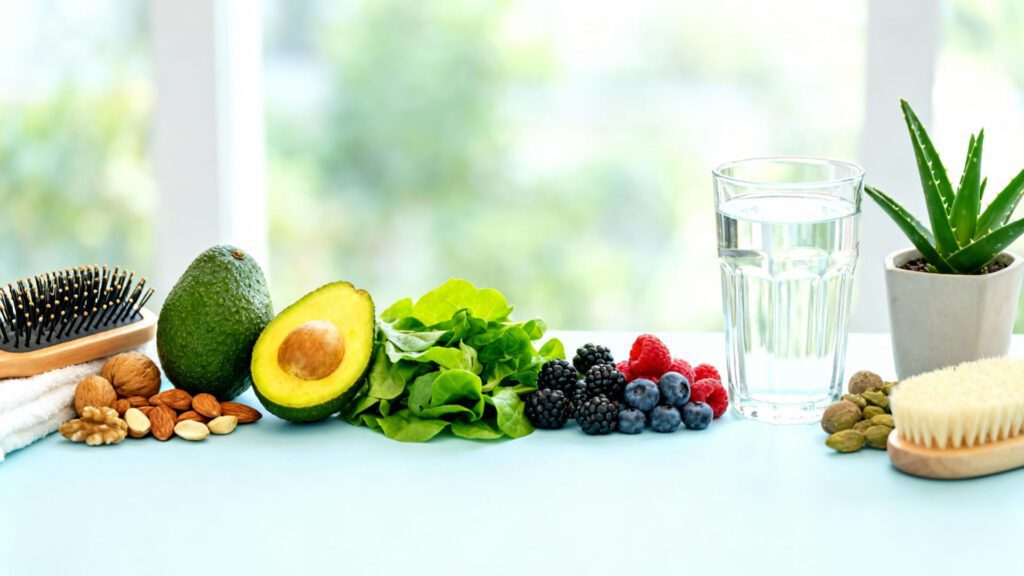
Hair care products matter—but nutrition and hydration play a huge role in how your hair looks and feels.
Drink Enough Water
Dehydration affects hair just like skin. Aim for steady hydration throughout the day.
Eat Hair-Friendly Foods
Focus on:
- Healthy fats (avocados, nuts, olive oil)
- Protein (eggs, fish, legumes)
- Vitamins A, E, and biotin
- Omega-3 fatty acids
Manage Stress
High stress can affect oil production and slow hair repair cycles.
Final Thoughts: Consistency Is the Real Secret
Dry hair doesn’t improve overnight. The key is consistent, gentle care that focuses on moisture retention and protection. Once you stop stripping your hair and start supporting it, you’ll notice:
- Softer texture
- Less breakage
- More shine
- Better manageability