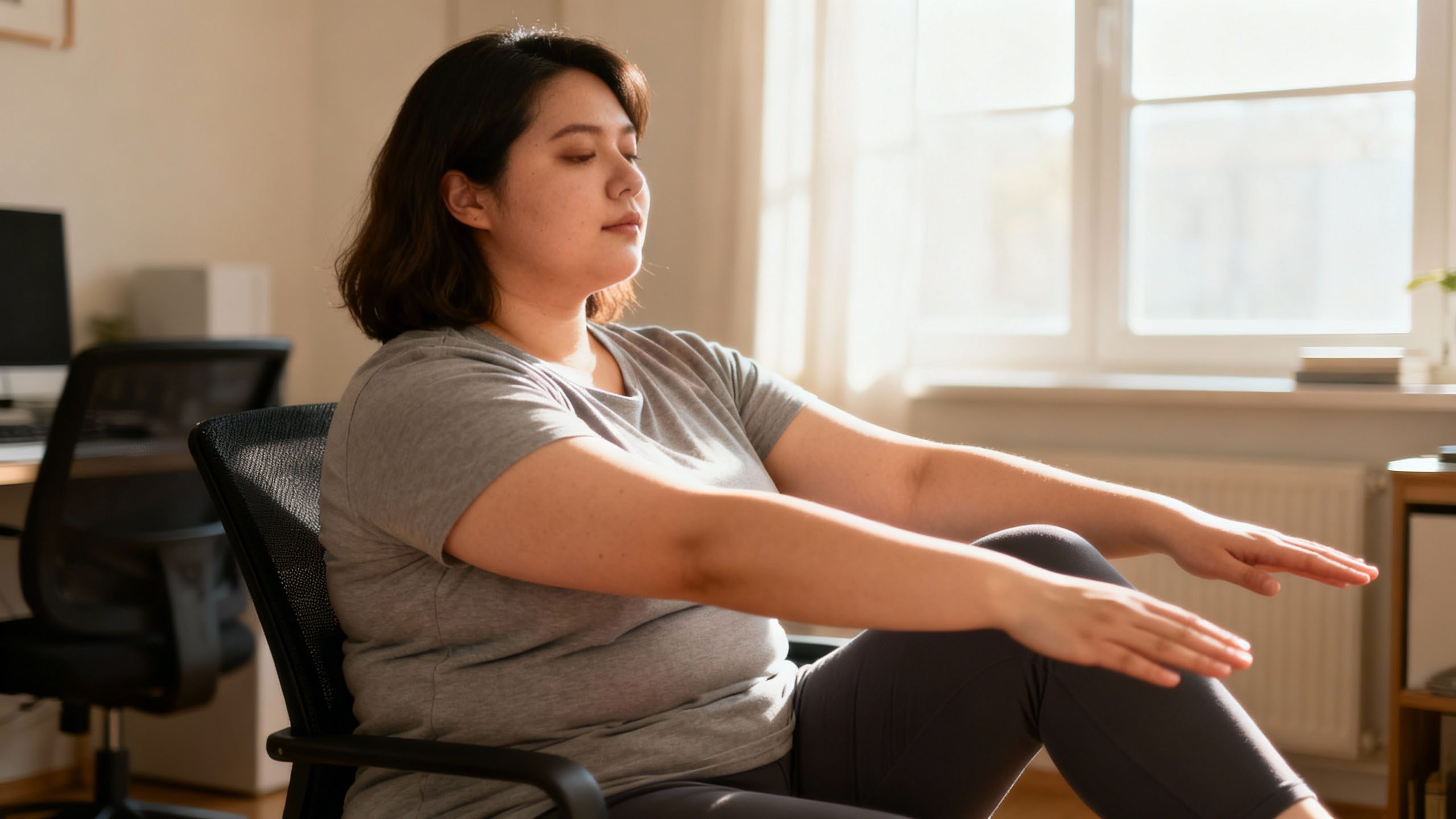
Easy movement ideas for a sedentary lifestyle focus on breaking long periods of sitting rather than jumping into structured exercise. When most of the day is spent seated, the body benefits greatly from small, frequent movements that restore circulation and reduce stiffness. These gentle actions help the body stay active without feeling overwhelming or disruptive.
Simple movements such as standing up every hour, stretching the arms and shoulders, or walking for a few minutes around the room can make a noticeable difference. These short breaks help wake up muscles and joints that become tight from sitting too long. Even small movements encourage better posture and reduce discomfort in the neck, back, and hips.
Incorporating movement into daily routines makes it easier to stay consistent. Walking while on phone calls, doing light stretches while watching TV, or moving during household tasks adds activity without requiring extra time. When movement fits naturally into the day, it feels less like effort and more like habit.
Over time, these easy movement ideas build momentum. As the body becomes more comfortable with regular movement, energy levels improve and stiffness decreases. This gentle approach supports long-term health and creates a foundation for more activity without pressure or exhaustion.
Start With Standing More Often
Table of Contents
Starting with standing more often is one of the simplest ways to add movement to a sedentary lifestyle. Standing engages muscles that remain inactive while sitting and helps improve circulation without requiring extra effort or planning. This small change can make a noticeable difference over time.
Standing up regularly reduces stiffness in the hips, lower back, and legs. Even brief moments of standing help reset posture and relieve tension caused by prolonged sitting. These short breaks support joint mobility and reduce feelings of heaviness or discomfort.
Incorporating more standing into daily routines is easy. Standing while on phone calls, during short breaks, or while performing simple tasks helps increase movement naturally. These moments add up throughout the day without feeling like exercise.
By standing more often, movement becomes a regular part of daily life. This gentle habit builds awareness of the body and creates a foundation for healthier activity levels without pressure or fatigue.
Add Gentle Movement Breaks
Adding gentle movement breaks throughout the day helps counter the effects of long periods of sitting. These small breaks refresh the body, improve circulation, and reduce stiffness without requiring intense effort. Gentle movement keeps the body engaged while still feeling comfortable and manageable.
Simple actions such as stretching the arms, rolling the shoulders, walking for a few minutes, or lightly moving the legs can reset tight muscles and joints. These movements help maintain flexibility and prevent discomfort from building up over time.
Movement breaks are most effective when they are frequent and short. Standing up every hour or moving for just a couple of minutes helps the body stay active without causing fatigue. This approach makes movement feel supportive rather than demanding.
Over time, gentle movement breaks improve energy levels and body awareness. By regularly interrupting sedentary habits, movement becomes a natural and sustainable part of everyday life.
Walk During Low-Effort Moments
Walking during low-effort moments is an easy way to add movement without changing your schedule. These are moments that already require little focus, making them ideal for gentle activity. By attaching walking to existing habits, movement feels natural rather than forced.
Simple opportunities include pacing while talking on the phone, walking during short breaks, or taking a few extra steps while waiting for something. These small walks increase circulation and reduce stiffness without requiring dedicated exercise time.
Low-effort walking also helps maintain energy levels. Short bursts of movement can refresh the body and mind, especially during long sedentary periods. This keeps the body engaged without causing fatigue or discomfort.
Over time, walking during these moments builds consistency. Small, repeated walks add up and create a habit of movement that fits easily into daily life, supporting better health in a sustainable way.
Use Simple Home Movements
Using simple home movements is an effective way to stay active without needing equipment or a dedicated workout space. These movements fit easily into daily life and help reduce stiffness caused by long periods of sitting or inactivity. Because they are familiar and low-pressure, they are easier to repeat consistently.
Basic actions such as gentle stretching, bending, reaching, or light bodyweight movements keep joints mobile and muscles engaged. These movements support flexibility, balance, and circulation without placing strain on the body. They can be done at any time, making them ideal for a sedentary lifestyle.
Simple home movements also encourage body awareness. Moving slowly and comfortably helps you notice tight areas and adjust intensity naturally. This reduces the risk of injury and keeps movement feeling supportive rather than exhausting.
Over time, these small movements build momentum. As the body becomes more comfortable with regular activity, movement starts to feel natural and beneficial, creating a strong foundation for long-term health and mobility.
Break Up Long Sitting Periods
Breaking up long sitting periods is essential for maintaining mobility and comfort in a sedentary lifestyle. Sitting for extended hours can slow circulation, stiffen joints, and create tension in the back, hips, and shoulders. Interrupting these periods helps the body reset and stay active.
Standing up, stretching, or walking for just a few minutes can make a meaningful difference. These brief interruptions wake up muscles that have been inactive and reduce the strain caused by staying in one position for too long. Even gentle movement helps restore blood flow and ease stiffness.
The goal is not to exercise intensely but to move regularly. Setting a reminder to stand or move every hour encourages consistency without pressure. Small actions repeated throughout the day are more effective than long periods of inactivity followed by sudden movement.
By breaking up sitting time, movement becomes part of your daily rhythm. This habit supports better posture, improved energy, and long-term physical comfort without requiring major lifestyle changes.
Choose Comfort Over Intensity
Choosing comfort over intensity helps make movement sustainable, especially in a sedentary lifestyle. When movement feels comfortable, the body is more likely to accept it and adapt positively. Intense or forced activity can create resistance, discomfort, and a higher risk of injury.
Comfortable movement allows muscles and joints to stay active without strain. Gentle actions such as light stretching, easy walking, or slow body movements support circulation and mobility while respecting the body’s limits. This approach keeps movement feeling supportive rather than exhausting.
Focusing on comfort also improves consistency. When movement feels manageable, it is easier to repeat throughout the day without mental or physical fatigue. Small, comfortable movements done regularly are far more beneficial than occasional intense efforts.
By prioritizing comfort, movement becomes a habit instead of a challenge. This mindset encourages long-term activity, helping the body stay mobile, energized, and resilient over time.
Move at Your Own Pace
Moving at your own pace allows activity to feel natural rather than stressful. In a sedentary lifestyle, rushing into faster or more demanding movement can create discomfort and discourage consistency. Respecting your current pace helps the body adapt safely and comfortably.
Everyone’s energy levels, mobility, and physical limits are different. Moving slowly or gently is not a setback—it is a smart way to build confidence and body awareness. When movement matches your comfort level, it feels supportive instead of overwhelming.
Choosing your own pace also reduces the urge to compare yourself to others. Progress is personal, and improvement happens through steady, repeated movement rather than speed or intensity. Small, calm efforts add up over time.
By moving at your own pace, movement becomes sustainable. This approach encourages regular activity, protects the body, and helps movement naturally fit into everyday life without pressure.
Use Daily Tasks as Activity
Using daily tasks as activity is an effective way to add movement without changing your routine. Everyday actions already require physical effort, and recognizing them as movement helps reduce the pressure to “exercise.” This approach makes activity feel practical and achievable.
Tasks such as cleaning, cooking, organizing, or running errands naturally involve bending, lifting, walking, and reaching. These movements keep muscles active, improve mobility, and increase circulation throughout the day. When done mindfully, they provide real physical benefits.
Daily tasks are especially helpful for maintaining consistency. Since these activities already happen regularly, they create built-in opportunities for movement without needing extra time or motivation. This helps break long periods of inactivity in a natural way.
By viewing daily tasks as activity, movement becomes part of normal life rather than a separate obligation. This mindset supports a more active lifestyle that feels realistic, sustainable, and easy to maintain.
Build Movement Gradually
Building movement gradually helps the body adapt without stress or strain. For a sedentary lifestyle, sudden increases in activity can feel overwhelming and lead to discomfort or loss of motivation. A slow, steady approach allows movement to become a natural part of daily life.
Starting with small amounts of movement gives the body time to adjust. Short walks, gentle stretches, or brief standing breaks may seem minor, but they prepare muscles and joints for more activity over time. These small steps reduce the risk of soreness and injury.
Gradual progression also supports consistency. When movement increases at a comfortable pace, it feels achievable and repeatable. This steady rhythm helps build confidence and makes activity feel less intimidating.
Over time, gradual movement leads to lasting change. What once felt challenging becomes easier, and adding more movement feels natural. This approach creates a strong foundation for long-term health and mobility without pressure or burnout.
Conclusion
Easy movement ideas for a sedentary lifestyle work best when they focus on comfort, consistency, and gradual change. Small actions such as standing more often, taking gentle movement breaks, walking during low-effort moments, and using daily tasks as activity help the body stay active without feeling overwhelmed.
By choosing comfort over intensity and moving at your own pace, movement becomes supportive rather than demanding. Over time, these small habits add up, improving mobility, energy, and overall well-being. When movement fits naturally into daily life, staying active feels achievable and sustainable.